How to Make Money on Instagram (Whether You Have 1K or 100K Followers)
How to Make Money on Instagram (Whether You Have 1K or 100K Followers)


You’ve probably heard stories of Instagrammers cashing in on the pictures they snap and share every day. You might’ve even looked at your own sizeable following and thought, “Maybe I can do that too.”
Just like bloggers, YouTubers, and anyone who’s amassed an audience around the content they produce, Instagrammers have reach and influence figured out—two things many companies struggle with.
Together, reach and influence offer the opportunity for Instagram creators to explore multiple streams of potential revenue, whether they want to build an empire or just earn some extra cash and free stuff.
How many Instagram followers do you need to make money?
If by now you’re wondering how many followers you need to start bringing in real revenue, the short answer is “not as many as you think.”
The long answer depends on factors that range from:
- What niche you’re in and how easily you can directly tie it to a product category (fashion, food, beauty, and fitness are popular niches, based on top Instagram hashtags)
- How engaged your followers are (100K fake followers won’t amount to much)
- Which revenue channels you explore
Naturally, the more engaged followers you have, the better. Check out our tips on how to get more followers on Instagram.
While top Instagrammers make thousands of dollars per post, even those with small-but-engaged followings of 1,000 have the potential to start making money.
Free Webinar:
How to Grow and Monetize Your Instagram Account
A free workshop with field-tested Instagram marketing tips. Learn how to grow your Instagram audience and monetize it with an online store.
How to make money on Instagram in 2020
Depending on your unique brand of Instagram content, your audience, and your level of commitment, you can make money on Instagram in the following ways:
- Work with brands on sponsored posts
- Become an affiliate
- Open your own online store
- Sell your photos online or on things
The beauty here is that chasing one revenue stream doesn’t necessarily rule out another.
So let’s start with the most common approach to Instagram monetization: partnering with brands as an influencer.
Work with brands on sponsored posts
The term “influencer” gets thrown around a lot these days.
An influencer is basically anyone who’s built themselves an online reputation by doing and sharing awesome things online. To their audiences, influencers are tastemakers, trendsetters, and trusted experts whose opinions about certain subjects are respected.
Many brands just can’t compete with that, so they partner with influencers on sponsored posts that help get the word out about their products.
But it’s not just the size and reach of your Instagram account that brands want—it’s your audience’s trust and engagement with your content.
It can be hard to balance your revenue as an influencer and your integrity as a creator, but if you’re not relying on your Instagram marketing income to stay afloat, you always have the freedom to be selective about the brands you work with, just as brands will be selective about the Instagrammers they work with.
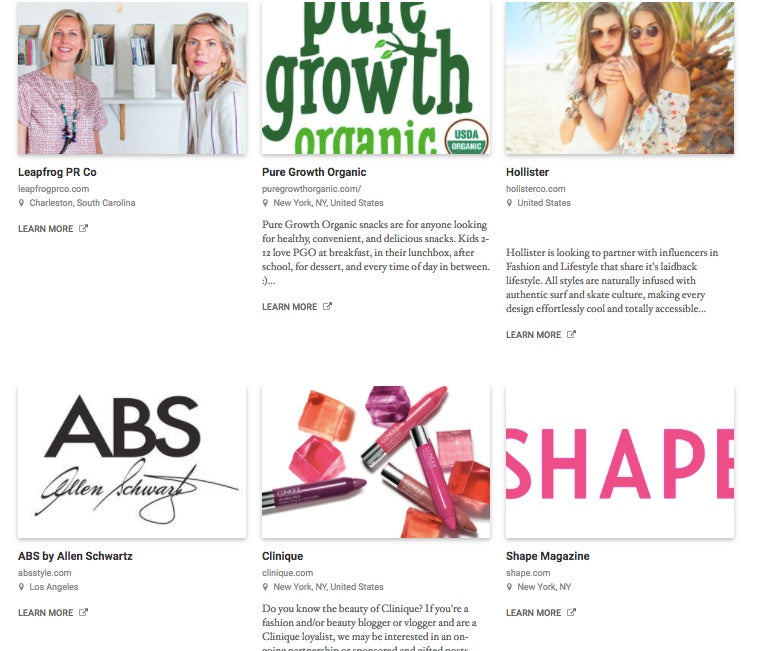
How to decide what to charge as an influencer
Typically these influencer deals involve the creation of content—Instagram ads, a post, a video, or a Story—and will sometimes include permission for the brand to use this content on their own site or in an ad.
Most of these deals are negotiable and can involve a single post or an entire campaign in exchange for a fee, a free product, a service, a gift, the promise of exposure, or some combination of these.
Keep in mind when negotiating that you’re not just offering content but access to your audience—a potentially large reach on one of the most popular social platforms around—and usage rights.
In a survey of 5,000 influencers, around 42% said they charged $200 to $400 per post—just to give you an idea of what some brands are willing to pay and how to negotiate based on the cards you’re holding.
Finally, it's important as an influencer to also know your own audience.
What is the makeup of your audience, and what is your engagement rate (total engagement divided by your number of followers)? You can dig up numbers to back this up in your Instagram Analytics report, if you’ve switched to a business account. This will help you be prepared when it comes time to negotiate.
Want to learn how to grow and monetize your Instagram account? Instagram marketing expert Gretta van Riel shows you how in Grow Your Business with Instagram, a free course at Shopify Academy.
How to find brands to work with
If you’re big enough, chances are brands will find you. But you can also look for brands to work with that are on a similar level in terms of personality and values, so your audience won’t feel like you’re “selling out.”
You can reach out to them directly to try to work out a deal, but you can also list yourself on one of the many influencer marketplaces out there to increase your chances of being discovered, including:
- Fohr. Connect your Instagram, blog, YouTube channel, and other social platforms to create an influencer “card” that shows your different profiles and total reach for brands shopping for a partnership. You can also access a list of brands and their wants, so you can take the initiative to reach out too.
- Grapevine. If you have 5,000 or more followers, you can list yourself in the Grapevine marketplace for the opportunity to work with like-minded brands.
- Crowdtap. Do small content creation tasks to earn rewards. This is great if you’ve got a smaller audience. Available in the U.S only.
- indaHash. Brands post campaigns you can participate in. Post a picture with the specified hashtags on Instagram and get paid. You need at least 700 engaged followers to be eligible.
Learn more: How to choose hashtags on Instagram
The rules vary when it comes to sponsored content, but to be on the safe side and respect your audience’s trust, consider adding a #sponsored hashtag to indicate sponsored posts.
You can find examples of sponsored posts and how Instagrammers integrate brands into their story or caption by searching #sponsored on Instagram, like this one from How He Asked, an account that shares wedding proposal stories and partners with a jewelry business:

Instagram also has a “Paid Partnership with” tag that prominently identifies sponsored posts, which some brands might require you to use to disclose your relationship with them.
Become an affiliate
Unlike an influencer, an affiliate is more invested in making sales for the partner brand—not just generating awareness—in exchange for a commission.
This is typically done with a trackable link or unique promo code to ensure clicks actually translate into sales. Since Instagram doesn’t yet allow links anywhere outside of your bio, you can only focus on one product at a time if you choose to rely on affiliate links, making promo codes a better option for Instagram since you can actually incorporate them into your posts.
Note: You can now add links to Instagram Stories to open up new income opportunities as an influencer.
Consider reaching out to one of the many online merchants offering affiliate programs. Or you can explore popular marketplaces like:
- ClickBank. An affiliate platform with a tier-based commission that’s open to everyone.
- RewardStyle. An invitation-only fashion and lifestyle influencer network that offers 20% commissions.
- Amazon Associates. A popular option that pays out a 10% commission.
Though it sounds like a numbers game, affiliate marketing is also an art, and you’ll have a better chance at success if you have a plan going into it and expand your online presence by creating a website and including other marketing channels.
Tip: Affiliate links can be long and ugly, so I recommend a URL shortener like bit.ly, especially if they're going in your Instagram bio.
Open your own online store
By now it might sound like the only way for an Instagrammer to make money is to sell out and work with other brands.
But creators of all kinds are in a good position to “sell out” with their own products: physical goods, services, or digital items that can be an extension of their brand, building a business with an audience at its center.
Ready to create your first business? Start your free 14-day trial of Shopify—no credit card required.
You need to invest some time upfront, but in today’s world, it’s almost natural for creators to make the leap to entrepreneurship. That’s becoming easier with the growing list of Instagram tools available to build an audience.
Just look at Loki the Wolfdog, one of the biggest Instagram dog-preneurs of his time.

By selling your own stuff, you don’t need to worry about integrating messages from other brands into your posting strategy. Better yet, you can get your own brand out there on the products you sell.
Fans can show their love and support your work by buying from you—a purchase they can feel good about.
There are a few ways to sell your own merch:
- You can use a print-on-demand serviceto print and ship your own t-shirts, pillows, coffee mugs, wall art, and more.
- You can sell services such as photography or consulting using your bio to direct interested people to a contact email or a link to your professional website.
- You can sell digital products such as courses, ebooks, or design templates.
- You can use your Instagram account to launch a business selling your own original products, or even a book.
If you plan on selling several items in your own Shopify store, you can also make purchases through Instagram possible on your website using one of the available Instagram gallery apps.
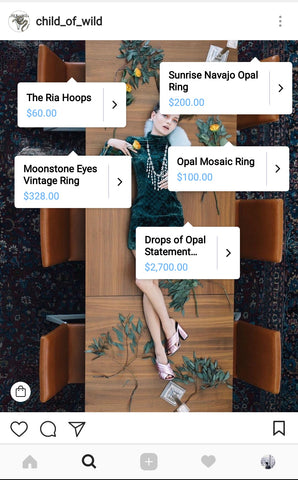
Take it a step further with our shopping on Instagram integration and add product tags and stickers to your Instagram stories and post so people buy directly from the app. To use it, you’ll also need to switch to an Instagram business account and have a Facebook page and an approved Facebook shop (all of which you can set up for no additional cost).
Sell your photos online or on things
Someone might get famous on Twitter by telling 140-character jokes, but Instagram is a photo-sharing app at its core. And photosare assets that can be licensed, printed, and sold in a variety of ways.
If photography is what got you into the Instagram game in the first place, you can list your photos in marketplaces like 500pxor Twenty20 where brands and publishers might license them.
However, you can also sell your photos as prints and on other physical products using a similar methods described in the last section. Services like Printful and Teelaunchlet you put your photos on posters, phone cases, pillows, and more, taking care of fulfilling orders and customer service, so all you really need to worry about is making sales.
Take the story of Daniel Arnold, who, according to an interview in Forbes, went from “eating toast three meals a day,” to making $15,000 in 24 hours by offering to sell prints of his popular-but-controversial photos. If you've already got the demand, all you need to do is take the initiative and offer your audience the opportunity to buy your photography from you.
FAQ: Make money on Instagram
Can you make money on Instagram?
Yes, definitely. You can get paid on Instagram in the following ways:
- Creating sponsored posts for brands that want to get in front of your audience.
- Becoming an affiliate and making a commission selling other brands’ products.
- Creating and selling a physical or digital product or offering a paid service.
- Selling licenses for your photography or videos.
How much do Instagram influencers make?
Instagram influencers are typically broken down into three categories:
- Micro-influencers. Accounts with less than 10,000 followers. A recent study showed these accounts made $88 per post on Instagram.
- Middle-tier influencers. Accounts with between 10,000 and 100,000 followers can make around $200 per post on average.
- Top-tier influencers. Accounts with between 100,000 and one million followers can expect to make about $670 per post. The price can greatly vary in this tier.
Influencers with more than one million followers can earn varying prices as well. For example, Loki the Wolfdog (@loki) has 2M+ followers and can make between $3,000 and $6,000 per post, according to an Instagram Money Calculator.
How much does Instagram pay?
The more followers you have on Instagram, the more money you can make. Rates are also determined by engagement, quality of content, name recognition, audience demographic, and skill set. The standard is $10 per 1,000 followers, but can vary depending on your contract and sponsor.
Getting paid on Instagram and beyond
What started as a hobby—making people laugh, doing silly photoshoots with your dog, or sharing pictures of food—can snowball into the chance to turn Instagram into a source of income fuelled by your engaged following. But why stop there?
There’s a world of possibilities out there for creators to make money on the internet. If you want to open up more revenue streams online, be sure to check out our tips on how to make money on YouTube. Your Instagram followers are bound to join you on other channels. You just have to open the doors for them to walk through.
Comments